
Rare Earths Americas, Inc. (“REA” or the “Company”) is pleased to announce initial results indicating widespread, near-surface rare earth mineralization with heavy rare earth enrichment at its 100%-owned Homer Project within Brazil’s Goiás Alkaline Province.
This press release features multimedia. View the full release here: https://www.businesswire.com/news/home/20260923227510/en/
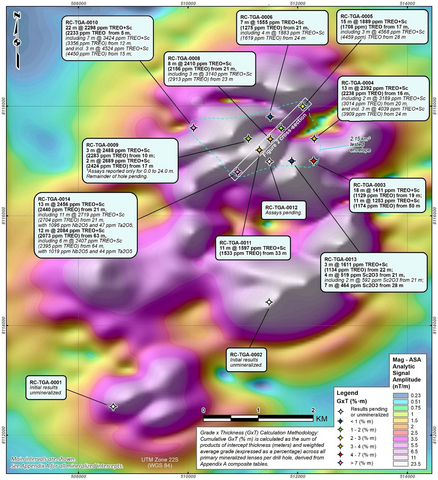
Figure 1 – Homer initial drill assay results overlaid on magnetic anomaly
As previously reported (see here), growing confidence in the scale and potential of the system, supported by airborne magnetics, soil geochemistry, gamma-radiometrics, geological mapping, and gravity surveying, led to the commencement of a fully funded US$5.0 million, 15,000-meter reverse circulation (“RC”) and diamond drilling (“DD”) program in June 2026.
The ongoing drill campaign has intersected widespread, near-surface mineralization across an expansive exploration footprint, reinforcing the geological model of a major alkaline-carbonatite system anchored by a ring-shaped magnetic anomaly exceeding 35 km² and extending more than 6.5 km along its major axis. Initial drilling has confirmed mineralization across a tested area of approximately 2.15 km², representing less than 20% of the primary geochemical anomaly currently identified at Homer-A and less than 7% of the total magnetic geophysical anomaly. Based on results received to date, the Company believes it has successfully advanced Homer from an exploration target, with initial results indicating widespread, near-surface rare earth mineralization across the tested area.
As of September 15, 2026, more than 6,500 meters of drilling had been completed at the Homer Project, with initial assay results confirming widespread, near-surface rare earth mineralization, including multiple drill intercepts grading more than 2,000 ppm total rare earth oxides (“TREO”) over intervals exceeding 10 meters (see Figure 1). Results also indicate elevated heavy rare earth oxide (“HREO”) distributions and exceptional concentrations of magnetic rare earth oxides, with multiple intercepts reporting HREOs exceeding 30% of TREO, Neodymium-Praseodymium (“NdPr”) exceeding 25%, and combined Dysprosium and Terbium (“DyTb”) exceeding 2%. These results underscore the presence of a highly favorable rare earth assemblage enriched in critical magnet metals.
In addition, preliminary results have identified zones enriched in niobium and tantalum associated with specific magmatic phases of the system. Importantly, all of these mineralized intersections, including TREO, niobium, and tantalum, occur specifically within the near-surface soil and saprolite enrichment profiles. Furthermore, within these weathered zones, scandium, typically grouped with rare earth elements due to shared affinities and reported as such in this release, has returned notable grades in targeted intercepts, indicating a component that warrants further evaluation in these areas. This distribution reflects a dynamic alkaline-carbonatite complex that has undergone geochemical evolution, followed by secondary enrichment. The significance of this distribution will be evaluated as part of future technical studies. As drilling continues to define the extent and continuity of the rare earth mineralization, the Company intends to evaluate and quantify these critical metals to assess their potential contribution to overall project value.
Supported by these initial results, the Company has accelerated drilling activities through the addition of two drill rigs, bringing the total fleet to four rigs. The Company expects to complete the current drill program by year-end and is targeting publication of an initial Mineral Resource Estimate (“MRE”) for the Project in 2027.
Initial Results Indicate Widespread Mineralization and Heavy Rare Earth Enrichment: In this initial exploration phase, 14 RC holes were completed across the project, with 12 specifically targeting the primary geochemical anomaly. This release reports initial assay results for 11 of these 12 primary zone holes. RC-TGA-0012 has been entirely excluded from the current dataset because assays remain pending for the critical 2.0 to 46.0-meter interval, which directly coincides with the targeted supergene enrichment zone. In contrast, RC-TGA-0009 has been included; although its analytical results remain partial, the received assays for the 0.0 to 24.0-meter interval capture a relatively considerable portion of the mineralized supergene profile. These 11 reported holes successfully outline a tested envelope of approximately 2.15 km², stretching roughly 2,100 meters along the NW-SE direction and 1,500 meters along the NE-SW direction (see Figure 1). Notably, this initial footprint represents less than 20% of the broader primary geochemical anomaly zone in the northeastern quadrant of the complex, which spans over 12 km² in total. All 11 reported exploration holes within this primary zone intersected mineralization.
Heavily Weighted toward the Heavies: Initial assay results reveal elevated HREO alongside exceptional grades of magnetic rare earth oxides, with multiple intercepts showing HREOs exceeding 30%, NdPr exceeding 25%, and combined DyTb exceeding 2% of TREO (see Figure 1).
-
RC-TGA-0010: Exceptional Thickness, High Magnetic Rare Earth Content, and Yttrium Enrichment
Intersected a broad, continuous zone of high-grade rare earths near surface, heavily weighted toward critical NdPr and premium DyTb magnetic elements, alongside specific high-grade yttrium zones.
| Highlights | From (m) |
To (m) |
Interval (m) | Grade | Key Assemblage / Credits |
| Main Intercept |
5 |
27 |
22 |
2,298 ppm TREO+Sc |
27.9% NdPr, 31.2% HREO (Incl. 3.8% DyTb) |
| Including |
12 |
19 |
7 |
3,424 ppm TREO+Sc |
28.3% NdPr, 33.9% HREO (Incl. 4.1% DyTb) |
| And incl. |
15 |
18 |
3 |
4,524 ppm TREO+Sc |
25.5% NdPr, 42.0% HREO (Incl. 4.8% DyTb) |
| And High-Grade Y₂O₃ |
16 |
18 |
2 |
1,486 ppm Y₂O₃ |
Representing 29.9% of TREO+Sc |
|
25 |
27 |
2 |
781 ppm Y₂O₃ |
Representing 31.4% of TREO+Sc | |
| Highest TREO |
16 |
17 |
1 |
6,096 ppm TREO+Sc |
21.8% NdPr, 53.6% HREO (Incl. 5.7% DyTb) |
Table 1- Hole RC-TGA-0010
-
RC-TGA-0004 & RC-TGA-0008: High-Value Basket and Consistent Heavy Rare Earths
Showing widespread distribution of the heavy rare earth and critical magnetic elements across the tested envelope, highlighted by a favorable, high-value rare earth basket.
| Highlights | From (m) |
To (m) |
Interval (m) | Grade | Key Assemblage / Credits |
| Main Intercept |
16 |
29 |
13 |
2,392 ppm TREO+Sc (2,238 ppm TREO) |
23.0% NdPr, 20.5% HREO (Incl. 2.4% DyTb) |
| Including |
24 |
27 |
3 |
4,039 ppm TREO+Sc (3,909 ppm TREO) |
26.3% NdPr, 40.9% HREO (Incl. 4.4% DyTb) |
| And High-Grade Y₂O₃ |
24 |
27 |
3 |
1,033 ppm Y₂O₃ | Representing 25.6% of TREO+Sc |
| Highest TREO |
25 |
26 |
1 |
4,660 ppm TREO+Sc (4,525 ppm TREO) |
26.6% NdPr, 44.2% HREO (Incl. 4.9% DyTb) |
Table 2 – Hole RC-TGA-0004
| Highlights | From (m) |
To (m) |
Interval (m) | Grade | Key Assemblage / Credits |
| Main Intercept |
21 |
29 |
8 |
2,410 ppm TREO+Sc (2,156 ppm TREO) |
31.0% NdPr, 19.3% HREO (Incl. 2.6% DyTb) |
| Including |
23 |
26 |
3 |
3,140 ppm TREO+Sc (2,913 ppm TREO) |
35.3% NdPr, 22.2% HREO (Incl. 3.1% DyTb) |
| Highest TREO |
24 |
25 |
1 |
3,570 ppm TREO+Sc (3,345 ppm TREO) |
37.3% NdPr, 23.3% HREO (Incl. 3.3% DyTb) |
Table 3 – Hole RC-TGA-0008
Niobium and Tantalum Potential (Up to 1,452 ppm Nb₂O₅): Highlighting potential by-product contributions, Homer-A has intersected robust niobium and tantalum grades directly coinciding with high-grade TREO zones. Notably, the southernmost drill hole within the primary geochemical anomaly (RC-TGA-0014) returned 11 meters at 1,096 ppm Nb₂O₅ associated with Ta. Similar to other alkaline-carbonatite complexes along the highly prospective “Azimuth 125” lineament (see Figure 6), this direct overlap may provide an opportunity to evaluate these critical metals as part of future technical studies. Furthermore, this intercept remains open to the south and southeast along distinct geochemical and geophysical features, which may warrant further exploration.
-
RC-TGA-0014: Stacked Rare Earths and Critical Polymetallic Upside
Demonstrating a broad, multi-layered mineralized system where high-grade rare earths directly coincide with significant niobium and tantalum mineralization, identifying potential polymetallic contributions.
| Highlights | From (m) |
To (m) |
Interval (m) | Grade | Key Assemblage / Credits |
| Upper Intercept |
21 |
34 |
13 |
2,456 ppm TREO+Sc (2,440 ppm TREO) |
17.7% NdPr, 8.2% HREO (Incl. 1.2% DyTb) |
| Nb-Ta Overlap |
21 |
32 |
11 |
1,096 ppm Nb₂O₅ | 47 ppm Ta₂O₅ |
| Lower Intercept |
63 |
75 |
12 |
2,084 ppm TREO+Sc (2,073 ppm TREO) |
16.8% NdPr, 9.0% HREO (Incl. 1.4% DyTb) |
| Nb-Ta Overlap |
63 |
70 |
7 |
1,009 ppm Nb₂O₅ | 42 ppm Ta₂O₅ |
Table 4 – Hole RC-TGA-0014
Scandium Potential (A Strategic Alloy Component): Scandium is a critical metal utilized in next-generation, high-strength alloys for the aerospace, automotive, and defense sectors, as well as in solid oxide fuel cells (SOFCs). The first batch of assay results has intersected notable Scandium (Sc₂O₃) grades within specific domains, indicating that Homer-A hosts concentrations of this strategic commodity that warrant further evaluation.
-
RC-TGA-0013: Elevated Scandium Intercepts
Intersected a broad, near-surface profile of elevated Sc₂O₃ concentrations, highlighting the potential for this strategic metal to serve as an additional value contributor within the broader alkaline complex as exploration advances.
| Highlights | From (m) |
To (m) |
Interval (m) | Grade | Interval Description |
| Upper Sc₂O₃ Interval |
21 |
25 |
4 |
519 ppm Sc₂O₃ | Upper scandium interval |
| Including |
21 |
23 |
2 |
592 ppm Sc₂O₃ | High-grade sub-interval |
| Lower Sc₂O₃ Interval |
28 |
35 |
7 |
464 ppm Sc₂O₃ | Lower scandium interval |
| Highest Sc₂O₃ |
21 |
22 |
1 |
644 ppm Sc₂O₃ | Peak scandium grade |
Table 5 – RC-TGA-0013
Favorable Jurisdiction & Land Position: The Homer-A Project is located in Goiás, Brazil, a historically productive and mining-friendly jurisdiction with a strong agricultural economy. The Project is situated on predominantly cleared agricultural land currently used for soybean and corn cultivation, with land access controlled by only three private landowners. The property is characterized by broad, flat to gently undulating terrain with minimal elevation changes, supporting efficient exploration and potentially favorable future development characteristics. To the Company’s knowledge, there are no overlapping conservation units or protected environmental areas within the project boundary, further enhancing the project’s strategic advantages as exploration advances.
Technical Review: Target A Complex and Fertile System
Results generated to date focus on Homer-A, one of three 100%-owned alkaline-carbonatite-type anomalies in Goiás, Brazil (Figure 6). Strategically emplaced along the highly prospective “Azimuth 125” structural corridor, a regional lineament globally recognized for hosting major niobium, phosphate and REE deposits, initial drilling indicates a robust geochemical consistency and inherent magmatic fertility, despite the varied magmatic phases typical of these intrusive environments.
The Homer-A alkaline system appears to draw from a deeply enriched source, suggesting a geochemically enriched setting consistent with known alkaline-carbonatite rare earth districts. Furthermore, geological processes seem to have selectively concentrated high-value elements across distinct zones within the complex, causing favorable deviations from typical light-to-heavy rare earth ratios. For example, at a preliminary 1,000 ppm TREO cut-off, the combined NdPr+HREO averages 55%, including nearly 2.5% of critical DyTb oxides. This selective enrichment is even more pronounced in higher-grade zones: across all intervals exceeding 4,000 ppm TREO to date, NdPr+HREO averages over 70%, with DyTb exceeding 4.5% (reaching up to >345 ppm).
This weathering process breaks down the primary rocks and can concentrate mineralization within the overlying soil and saprolite profiles. Guided by a predictive model, drilling indicates consistent mineralization across the complex so far. This broad fertility is further amplified by the southernmost drill hole, which successfully intercepted significant niobium and tantalum alongside the rare earths.
With exploration rapidly advancing, REA remains firmly on schedule to complete 15,000 meters of drilling by year-end, aiming to delineate the deposit’s footprint and deliver a maiden Mineral Resource Estimate in 2027.
For full appendix see attached PDF.
About Rare Earths Americas
Rare Earths Americas, Inc. is an exploration stage company advancing a portfolio of critical minerals projects focused on high-grade rare earth mineral assets in the United States and Brazil. REA’s portfolio includes three material projects, which the Company believes positions REA as a future potential cornerstone of non-Chinese rare earth supply, aligning with Western industrial and national security priorities. Rare earth elements are essential for advanced U.S. industries including robotics, electric vehicles, energy, defense, and consumer electronics.
Forward-Looking Statements & Technical Notes
This communication contains forward-looking statements within the meaning of Section 27A of the Securities Act of 1933, as amended, and Section 21E of the Securities Exchange Act of 1934, as amended. When used in this communication, the words “plan,” “target,” “anticipate,” “believe,” “confirmed,” “could,” “designed to,” “discovery,” “estimate,” “evaluate,” “expect,” “focused on,” “intend,” “may,” “opportunities,” “potential,” “seeks,” “should,” “will,” “would” and similar expressions are intended to identify such forward-looking statements. Any express or implied statements contained in this communication that are not statements of historical fact may be deemed to be forward-looking statements.
Forward-looking statements in this communication include, but are not limited to: the characterization of Homer-A as a rare earth discovery or the confirmation of a mineralized system; the potential for mineralization at the Homer Project, including the potential scale, continuity, grade, and distribution of rare earth, niobium, tantalum, and scandium mineralization; the possibility that ongoing or future exploration activities, including drilling, sampling, metallurgical testing, geological mapping, and related technical work, may improve the Company’s understanding of the project’s geology and mineral potential; the Company’s plans to complete the current drill program by year-end and to publish an initial Mineral Resource Estimate for Homer-A in 2027; the acceleration of drilling activities and expansion of the drill fleet to four rigs; expectations regarding the potential contribution of niobium, tantalum, and scandium to overall project value; characterizations of the economic significance of the rare earth assemblage, including statements regarding the relative value of the heavy rare earth basket, the potential for polymetallic value, and comparisons to other projects; the possibility that metallurgical testing may confirm whether mineralization is amenable to ionic clay recovery methods or economic extraction; the possibility that future exploration results may support the delineation of a mineral resource; the Company’s plans to continue exploration and technical evaluation activities; the potential advancement of the project through future exploration and development stages; and the Company’s strategic objectives relating to the exploration and development of critical mineral opportunities.
The Homer Project is currently at an early-stage exploration phase. No mineral resource or mineral reserve has been defined on the property. The Company has not yet determined the nature, continuity, extent, grade, economic significance, or metallurgical characteristics of any mineralization that may be present. While references to “clay-hosted” mineralization reflect the macroscopic description of the weathered profile, the Company has not yet established whether the mineralization is associated with ionic clay, hard-rock, or any other deposit type. Furthermore, as no metallurgical leach testing has been completed, there can be no assurance that the mineralization will be amenable to economic extraction or typical ionic clay recovery methods.
There is no certainty that continued exploration will result in the discovery of economically significant mineralization, the definition of a mineral resource, the confirmation of any exploration model, the completion of the planned drilling program on time or within budget, or the advancement of the project toward development. The characterization of initial results as a “discovery” reflects the Company’s interpretation of early-stage exploration data and does not constitute a determination that the mineralization is economically viable. Exploration results obtained from surface sampling, drilling, geophysical surveys, geological interpretations, or other exploration methods may not be indicative of future results. The extent, continuity, grade distribution, metallurgical characteristics, and economic significance of any mineralization have not yet been established and remain subject to additional drilling, resource estimation, technical studies, and economic evaluation.
These forward-looking statements are based on assumptions and expectations that may not prove to be accurate and are subject to numerous risks and uncertainties that could cause actual results to differ materially from those described in such statements. These risks and uncertainties include, among others: the uncertainty inherent in early-stage mineral exploration; geological, technical, and interpretation risks; uncertainty regarding the presence, continuity, grade, and extent of mineralization; the possibility that exploration programs may not achieve their objectives; the absence of mineral resource estimates; uncertainties relating to whether metallurgical testing will confirm favorable processing characteristics, including whether mineralization is ionic clay-hosted and amenable to leaching; the risk that niobium, tantalum, and scandium mineralization may not prove to be of economic significance; the risk that peer comparisons may not be meaningful due to differences in analytical methods, cut-off grades, and project maturity; fluctuations in commodity prices, including the prices of dysprosium, terbium, neodymium, praseodymium, niobium, tantalum, and scandium; regulatory, environmental, and permitting risks specific to mining operations in Brazil; political, economic, and trade policy risks in Brazil and the United States, including tariff and export-related risks; currency exchange rate fluctuations between the U.S. Dollar and the Brazilian Real; availability of financing on acceptable terms; our need for substantial additional capital; the state of the economy and financial markets generally; market conditions; and general economic, political, and business risks. The foregoing list is not exhaustive.
Investors are cautioned that early-stage exploration projects carry a high degree of uncertainty and that the presence of anomalous geochemical values, favorable geology, or preliminary exploration results does not necessarily indicate the existence of an economically viable mineral deposit.
For additional information regarding factors that may cause actual results to differ materially from those indicated in our forward-looking statements, we refer you to the risk factors included in the Company’s Rule 424(b)(4) Prospectus filed on May 7, 2026 and the Company’s Quarterly Report on Form 10-Q for the quarter ended March 31, 2026, which are available at www.sec.gov. We caution investors not to place undue reliance on the forward-looking statements contained in this communication. These statements speak only as of the date of this communication, and we undertake no obligation to update or revise these statements, whether as a result of new information, future events or otherwise, except as may be required by law.
Data Verification and QA/QC
Reverse circulation (“RC”) drilling operations conducted at the Homer Project were completed under the supervision of the Company’s technical team. Drill samples were logged, photographed, and processed in accordance with industry-standard exploration practices. Continuous samples were collected at standard one-meter intervals, an inherent feature of the RC drilling method, and submitted to ALS for preparation and comprehensive geochemical analysis.
Sample preparation was carried out by ALS Laboratory Group in Goiânia, Brazil, under the PREP-31H protocol (crushing, splitting, and pulverizing), with geochemical analyses completed using lithium borate fusion (ICP-AES/MS), four-acid digestion, aqua regia, LECO furnace assays, and specialized techniques for halogens and precious metals.
The Company’s quality assurance and quality control (“QA/QC”) program includes the insertion of control samples within analytical batches of 50 samples, representing 12% of the total samples in each batch. Each batch incorporates one blank sample from ITAK, two Certified Reference Materials (“CRMs”) from OREAS, a pulp duplicate, a coarse duplicate, and a field duplicate split directly at the Company’s sample preparation facility.
To date, all blank samples have returned values below detection limits, indicating no evidence of contamination during sample preparation or analysis. In addition, CRM results have demonstrated a high level of accuracy, with the vast majority of rare earth assays falling well within acceptable performance limits. Furthermore, field, coarse, and pulp duplicates have shown strong correlation and repeatability. The overall QA/QC results confirm the reliability and integrity of the reported geochemical data, consistent with industry best practices.
Qualified Person Information
Leandro Coracini Ollita, Qualified Person registered with the Brazilian Commission for Resources and Reserves (CBRR), Registration No. 023160, who is a “qualified person” within the meaning of Item 1300 of Regulation S-K (“S-K 1300”), has reviewed and approved the disclosure of technical information contained in this press release. Mr. Ollita confirms that he has managed and monitored the Homer-A project in on site since the first stages of exploration. His continuous supervision encompasses the early exploratory works through to the execution of the reverse circulation (RC) and ongoing drilling programs, including the rigorous sampling protocols and the concurrent QA/QC campaigns, thereby attesting to the reliability of the geochemical assay results disclosed herein.
The information provided in this public statement constitutes initial “Exploration Results” (as defined in S-K 1300). At this stage, it is technically premature for the reader to use the presented information to derive estimates of tonnage and grade or quality. These Exploration Results cannot currently form part of a formal declaration of Mineral Resources or Mineral Reserves (as defined in S-K 1300), and they must not be presented in a way that unreasonably implies the discovery of potentially economic mineralization. While these exploration results are encouraging, they do not automatically translate into Mineral Resources or Mineral Reserves. The definition of a Mineral Resource requires the application of specific modeling, geostatistical, and estimation techniques, which can only be reliably applied once the drill grid spacing is deemed adequate, particularly in mineral deposits that may exhibit high geological or grade variability. Mr. Ollita is an employee of a wholly-owned Brazilian subsidiary of the Company.
What are Rare Earths?
Rare earth elements are a group of 17 specialty metals critical to a wide range of advanced and everyday technologies. They are used in high-performance permanent magnets, particularly neodymium-iron-boron (NdFeB) magnets, which enable high strength and efficiency in applications such as robotics, electric vehicles, defense systems, wind turbines, and consumer electronics. In simple terms, motion generated by electricity is often powered by NdFeB magnets, making rare earths essential inputs in everyday items, from the motor that raises and lowers a car window to the motors used in drones and humanoid robots.
Of the 17 rare earth elements, neodymium (Nd), praseodymium (Pr), dysprosium (Dy), and terbium (Tb) are the key materials used in high-performance permanent magnets. Dy and Tb are particularly valuable due to their ability to enhance magnet performance at high temperatures.
According to Adamas Intelligence, China accounts for over 90% of global Dy and Tb production. This concentration has increased the strategic importance of developing new rare earth projects in other jurisdictions to support supply chain diversification and long-term demand growth.
What is Niobium?
Niobium (Nb) is a specialty metal primarily used as a microalloying element in high-strength low-alloy (HSLA) steels. Even small additions can significantly improve strength, toughness, and corrosion resistance while reducing overall steel weight. As a result, niobium is widely used in pipelines, construction materials, automotive components, and infrastructure. According to the U.S. Geological Survey (USGS), steel applications account for approximately 77% of U.S. domestic niobium consumption. Demand has remained relatively resilient because it is linked to long-cycle sectors such as infrastructure development, energy pipelines, and automotive lightweighting trends. Moreover, there is no readily available substitute that can deliver the same performance at a comparable cost.
The remainder of niobium demand comes from superalloys, typically in the form of high-purity ferroniobium and nickel-niobium. These materials are used in nickel-, cobalt-, and iron-based alloy systems for demanding applications such as jet engine components, rocket assemblies, and high-temperature, corrosion-resistant equipment.
On the supply side, global niobium mine production in 2025 was estimated at 112,000 tonnes, with Brazil accounting for roughly 93% of total output. This level of concentration means that niobium lacks the diversified, multi-country supply base characteristic of most industrial metals. Instead, it more closely resembles a single-country, limited-producer market, making any new and credible source of supply outside the established producers strategically significant. In this respect, the niobium market shares some similarities with the rare earths market and its historical dependence on China.
Taken together, a metal with highly specialized and difficult-to-replace industrial applications, demand driven by infrastructure and aerospace growth, and a supply base concentrated almost entirely within one country presents a compelling strategic proposition. The Homer Project’s niobium potential, if confirmed through further exploration and technical evaluation, would be assessed in the context of these market dynamics. Although Homer-A is also located in Brazil—and therefore does not represent geographic diversification in the way a non-Brazilian niobium deposit would—it nonetheless has the potential to emerge as a notable alternative source of supply within a highly concentrated market.
What is Tantalum?
Tantalum is a critical specialty metal used primarily in electronic capacitors, aerospace superalloys, and other high-performance applications. Global mine production in 2025 is estimated at approximately 2,500 tonnes, with the Democratic Republic of the Congo accounting for approximately 52% of supply, followed by Nigeria and Rwanda at approximately 16% each. According to the USGS, apparent U.S. tantalum consumption totaled approximately 890 tonnes in 2025. With no domestic tantalum production since 1959, the United States remains entirely reliant on imports to meet demand.
The importance of tantalum to U.S. supply chain security and national defense was further highlighted in 2025, when the U.S. government invested approximately $1 billion across critical mineral initiatives through strategic stockpiling programs, direct equity investments, grants, and loans. Notably, the National Defense Stockpile acquired several critical minerals, including antimony, cobalt, scandium, and tantalum.
View source version on businesswire.com: https://www.businesswire.com/news/home/20260923227510/en/
Media gallery


