
Home saunas are no longer limited to dedicated wooden rooms. Residential applications accounted for 58.92% of global sauna industry revenue in 2025, according to Grand View Research. The research firm also projects infrared saunas to be among the fastest-growing segments of the market, reflecting continued interest in home-based heat and wellness systems.
For households without the space or desire for a permanent sauna installation, portable sauna tents provide a more flexible alternative. A detailed sauna tent buying guide can help consumers compare heating technologies, dimensions, materials, and other practical differences. Steam, far-infrared, and radiant near-infrared models create noticeably different environments, and those differences can affect humidity, setup requirements, maintenance, and the amount of usable interior space.
Steam Sauna Tents: Humid Heat in a Compact Space
A steam sauna tent typically uses an external electric steam generator connected to the enclosure. Water is heated in the generator, and steam is directed inside the tent to create a warm, humid environment.
The moisture-rich environment is a defining characteristic of this format and may appeal to consumers who prefer humid heat. Steam tents also tend to have relatively compact footprints, with many designed around a chair and seated sessions. That can make them practical for apartments or rooms with limited space.
There are trade-offs to consider. Water and condensation mean the enclosure needs proper cleaning and drying after use. Buyers may also want to consider the materials, coatings, seams, and other components that will repeatedly be exposed to both heat and moisture.
Far-Infrared and Near-Infrared Tents Offer a Different Kind of Heat
Far-infrared and near-infrared sauna tents generally create a dry-heat environment rather than producing steam. Instead, these models generally use carbon or ceramic heating panels for far-infrared and incandescent heat lamp bulbs for near-infrared to create a dry sauna environment.
The absence of steam may appeal to consumers who prefer dry heat or want to avoid managing water and condensation. There’s also no steam generator or water reservoir to deal with during a typical session.
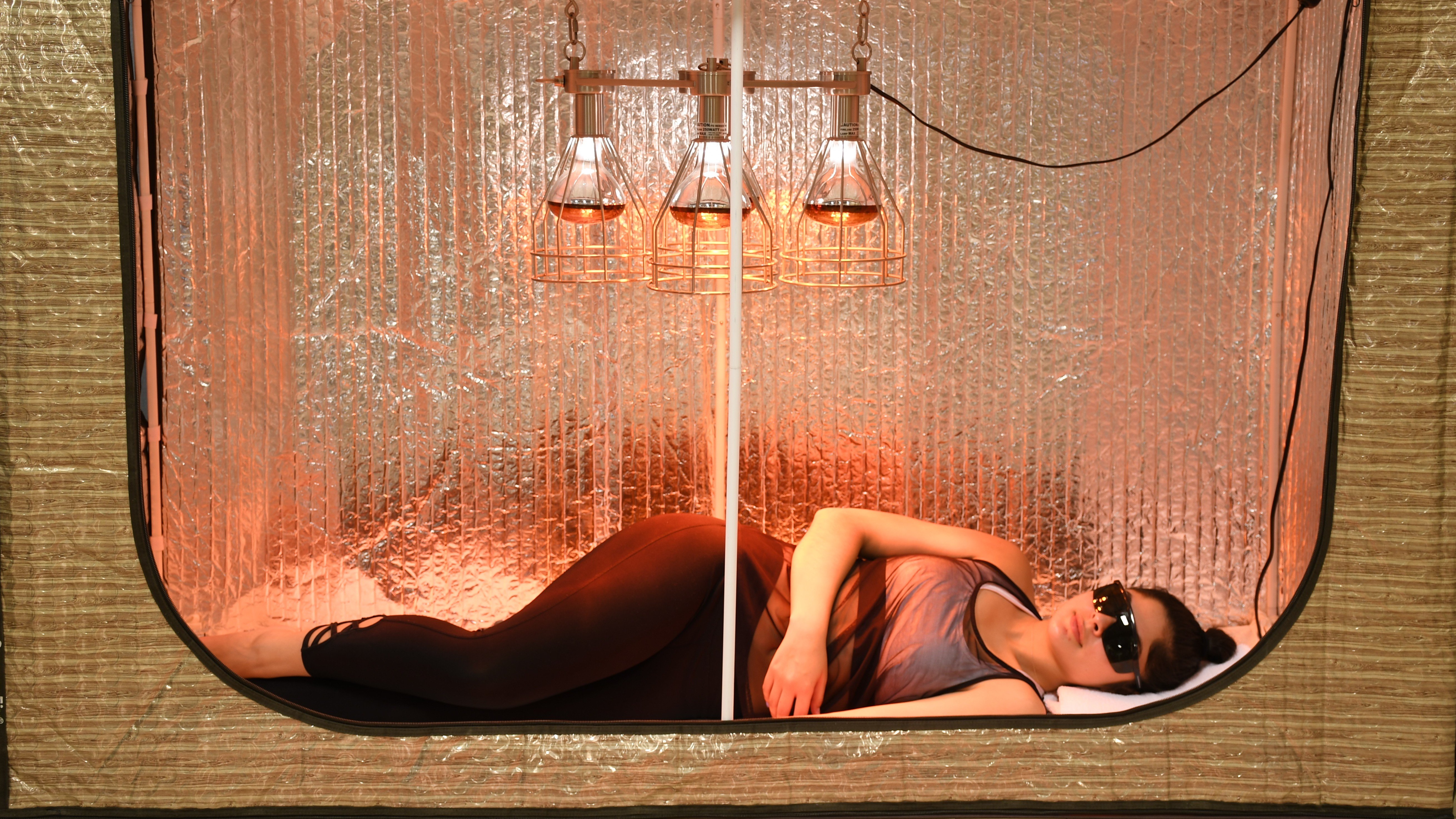
Many FIR tents are designed primarily for seated use, making interior dimensions an important consideration. A model may occupy relatively little floor space while providing limited room once seating and heating components are positioned inside. However, insulated Near-Infrared tents are longer and taller, allowing multiple people to move, stand, lie down, or sit.
Not Every Infrared Sauna Tent Works the Same Way
The term “infrared sauna tent” can refer to more than one type of product.
Far-infrared panel systems and radiant near-infrared lamp systems should not be considered interchangeable technologies. FIR tents commonly use carbon or ceramic panels positioned around the enclosure, while radiant systems may use incandescent lamps that emit a broad spectrum of visible and infrared energy.
These differences can affect heat intensity, heater placement, enclosure design, and the overall user experience. Some larger radiant sauna tents also provide enough interior space to stand, stretch, or move lightly, rather than requiring the user to remain seated for the entire session.
Radiant lamp systems may also have additional safety requirements involving lamp clearance, positioning, exposure time, and eye protection. Users should follow the manufacturer’s instructions and safety requirements for the specific system.
Sauna Tent Materials and Construction Also Matter
It’s easy to focus entirely on whether a tent uses steam, FIR panels, or radiant lamps. But the enclosure itself deserves attention too.
Regardless of heating technology, sauna tent materials are repeatedly exposed to elevated temperatures. Consumers can examine the fabrics, coatings, insulation, adhesives, and structural materials used in the enclosure and determine whether the manufacturer provides testing or documentation supporting material-related claims.
This can be particularly important when evaluating broad marketing terms such as “non-toxic,” “low off-gassing,” or similar material claims. Published testing or supporting documentation can provide consumers with more useful information than marketing terminology alone.
Construction quality and serviceability can also affect long-term ownership. Zippers, seams, poles, heating elements, cords, and other components may wear over time. Replacement-part availability and warranty coverage can therefore be as important as the original feature list.
Different Sauna Technologies Suit Different Home Uses
There is no single format that delivers the same advantages for every buyer.
Steam tents may suit consumers who prefer humid heat and a compact seated configuration. Far-infrared models offer a dry alternative without a steam generator, while radiant lamp-based tents may appeal to consumers seeking a different heating experience or a larger enclosure with more room for movement.
Buyers can compare heating style, humidity levels, interior dimensions, maintenance requirements, materials, safety considerations, replacement part availability, and warranty coverage before selecting a sauna tent for regular home use.
Creatrix Solutions has also published a sauna tent buying guide examining heating technologies, enclosure design, materials, space requirements, and other practical considerations for consumers comparing home sauna tents.
As the home sauna market continues to expand, meaningful differences between steam, far-infrared, and radiant sauna tents are becoming increasingly important for consumers to understand. Heating technology is only one consideration; enclosure size, materials, maintenance, safety requirements, serviceability, and warranty support can ultimately have just as much influence on long-term satisfaction.
Creatrix Solutions
contact@creatrixsolutions.com
+1-866-686-5605
214 E Albany Avenue
Building E101
Kennewick
WA
99336
United States


