
Originally Posted On: https://www.theboxery.com/blog/how-to-decide-when-bubble-bags-beat-rolled-bubble-wrap-for-packing/
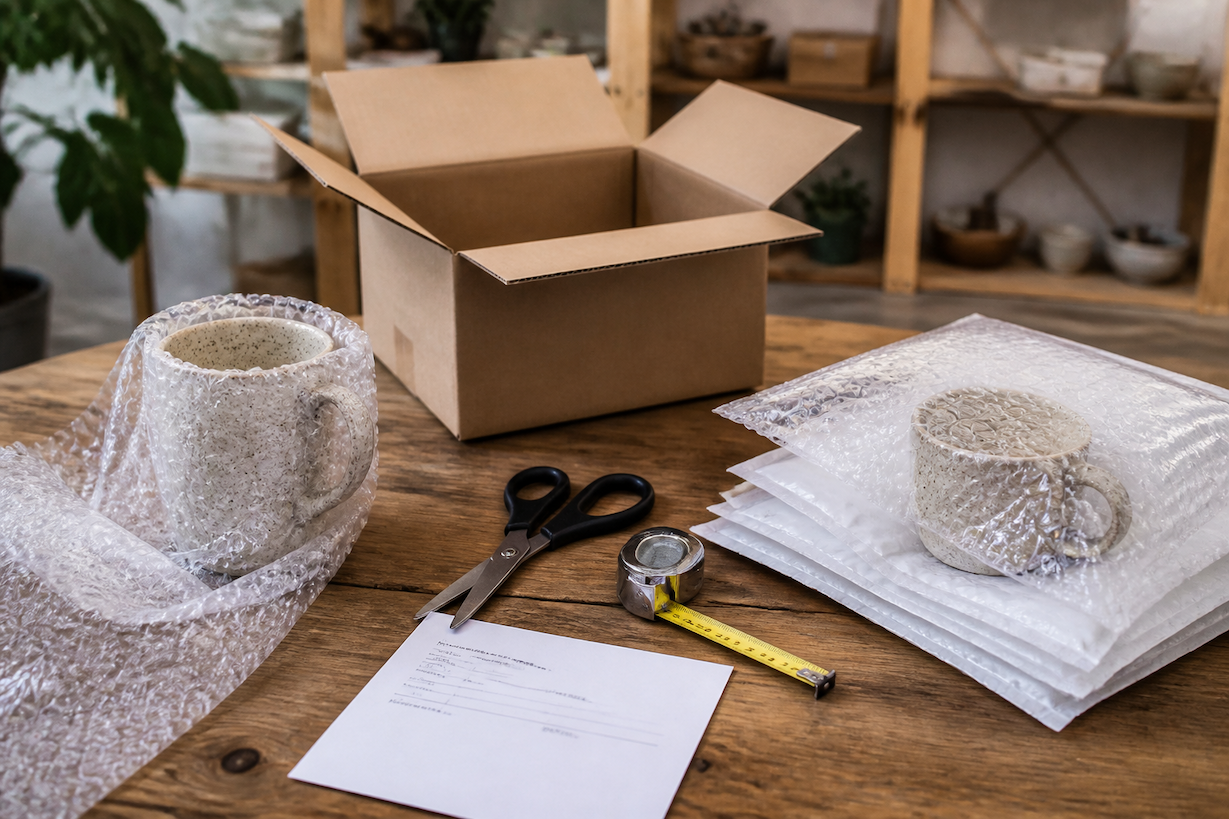
Twenty bucks a roll or a stack of pre-made bags — pick wrong and you’ll either blow your packing budget or watch a ceramic mug arrive in three pieces. That’s the real tension every Etsy and eBay seller runs into once order volume climbs past hobby level. Bubble wrap isn’t one product; it’s a whole category, and rolled sheets versus pre-formed bubble bags solve different problems even though they use the same cushioning technology.
Here’s what most sellers miss: the decision isn’t about which product is “better.” It’s about matching the packing method to your product mix, your order volume, and how much time you (or your one employee) actually have to spend wrapping breakables every day. A jewelry seller shipping 30 tiny orders a week has completely different needs than someone moving 200 ceramic mugs a month. Get the match wrong, and you’re either paying for cushioning you don’t need or losing money on damaged-goods refunds. Let’s get into how to actually make that call.
What You’ll Need Before You Start Comparing Packing Materials
Picture a Sunday night: 40 orders sitting on the table, half of them ceramic mugs, half of them scarves. You reach for one roll of wrap and realize it won’t cover both jobs well. That’s the moment most sellers figure out that Bubble wrap comes in more forms than the single roll sitting in the closet, and picking the wrong one costs time and money on every single shipment.
Materials: Roll, Foam, and Bag Options to Have on Hand
Keep three things within reach: a roll of small-bubble wrap (3/16″) for wrapping odd shapes, a stack of pre-made bubble bags for repeat-size items, and a few foam sheets for flat, scratch-prone surfaces. Cheap doesn’t always mean bad here — bulk rolls run inexpensive per square foot once you’re past a few hundred feet.
Know Your Product Mix Before Choosing Cushioning
Before choosing packaging protection, sort your last 30 shipments by shape and weight. Uniform items favor bags. Mixed inventory needs rolled stock on hand.
Step 1: Measure Your Product Volume to Decide Between Bags and Rolls
Grab a tape measure before you grab anything else. Get length, width, and depth in inches for your actual product — not the box it’ll eventually sit in. A mug is different from a wine glass, and a picture frame is different from both. If your item’s under roughly 10×14 inches and fairly uniform in shape, a pre-formed bag usually wins on speed. If it’s oddly shaped, oversized, or you’re wrapping dozens of different SKUs, cut-to-size bubble rolls give you more flexibility.
How Inch-by-Inch Sizing Affects Bubble Bag Fit
Here’s what most people miss: a bag that’s even half an inch too tight tears at the seams during transit. Too loose, and the item rattles around inside, defeating the whole purpose. Measure your item, then add 1-2 inches of slack on each dimension for cushioning room. Do this for every product line before ordering bulk — guessing costs you money twice, once on wasted bags and again on damage claims.
Step 2: Weigh Cost Per Shipment – Cheap Bulk Rolls vs. Pre-Made Bags
Where to Buy Bubble Wrap Cheap: Bulk Pricing vs. Retail Pickup
So which actually costs less per box — a roll or a bag? Run the math before you decide. A 12-inch roll cut by hand wastes inches on every piece, and that waste adds up fast over hundreds of shipments. Pre-formed bags cost more per unit up front, but they eliminate scrap and cut packing time roughly in half.
Grabbing a roll at retail (think a quick stop for bubble wrap Walmart shoppers make in a pinch) works fine for one-off jobs. But sellers shipping weekly need real bulk pricing, not shelf pricing padded for foot traffic.
For fragile items — ceramics, glass, small electronics — bubble mailers kraft/poly often beat cut-to-size wrap on both speed and protection, since the cushioning’s built in and there’s no taping a loose sheet shut.
Bottom line: cheap per-roll pricing looks good until you count labor and waste. Bags win on small, repeat orders. Bulk rolls win on odd shapes and large-volume packing days.
Step 3: Match Bubble Size and Thickness to Fragility Level
Here’s a number that surprises most sellers: roughly 70% of breakage claims on fragile shipments trace back to using the wrong bubble size, not a lack of padding altogether. Small 3/16″ bubble handles light ceramics and jewelry fine, but it flattens under real weight. Larger 1/2″ bubble holds air longer and absorbs shock better on anything over two pounds.
Small vs. Large Bubble – Which Cushions Better for Heavy-Duty Items
For heavier stoneware, glass vases, or dense candles, go with large bubble or double-layer wrapping — small bubble just doesn’t have the air volume to stop a drop impact. If you’re buying bubble mailers bulk, pick the size based on your heaviest recurring product, not your average one.
When Foam or Polyethylene Sheets Beat Bubble Entirely
Bubble isn’t always the right call. Foam sheets and polyethylene wraps outperform bubble on flat glass, mirrors, or picture frames where bubble can shift and leave gaps. They’re also better for long-term storage since foam doesn’t lose its cushioning the way old bubble does.
Step 4: Test Assembly Speed – Bags for High Volume, Rolls for Custom Jobs
Here’s a claim that surprises most sellers: the roll isn’t actually faster once you’re packing more than 20 orders a day. Everyone assumes a big roll of bubble wrap sitting next to the workstation is the efficient setup. It’s not — not when you’re cutting, wrapping, and taping the same shape over and over.
Grab a stopwatch and time it yourself. Pre-formed bags take roughly 8 to 12 seconds per item — drop it in, fold the flap, done. Rolled material runs 20 to 30 seconds once you factor in cutting to length, wrapping the item, and taping the seam shut. At 50 orders a day, that gap adds up to real labor cost by the end of the month.
Rolls still win for anything odd-shaped — vases, lamp bases, framed art. You can’t force a weird dimension into a pre-cut bag. If you’re new to fragile-item packing in general, our guide on how to pack fragile items with bubble wrap walks through both approaches side by side.
Bottom line: match the tool to the volume, not the other way around.
Common Mistakes to Avoid When Choosing Between Bubble Bags and Rolled Wrap
Skipping the Perforated Seams Check
Picture this: a seller grabs a roll off the shelf, cuts a hunk with scissors instead of tearing along the perforated line, and wastes six extra inches on every single package. Rolls are scored every 12 inches for a reason — tear there, not wherever the scissors happen to be. Skip that step, and you’re burning through material fast, which eats into margins nobody budgeted for.
Ignoring Biodegradable and Reusable Alternatives
Here’s what most people miss: not every fragile item needs a full roll cut-and-wrap job. For jewelry, small ceramics, or cosmetics, poly bubble mailers skip the taping and folding entirely — drop the item in, seal, done. Rolls still win for oddly shaped or bulk items, but ignoring bagged options means extra labor per package. And for sellers chasing greener packaging, biodegradable peanuts or reusable wrap alternatives deserve a real look before defaulting to plastic every time. Cheap isn’t always cheap once labor time gets counted.
How-To FAQ
Does USPS give free bubble wrap?
No, USPS doesn’t hand out free bubble wrap at retail counters. They do offer free flat-rate boxes, but you’ll still need to bring your own cushioning — a roll of bubble or a few bags from your own stock.
What’s a cheaper alternative to bubble wrap?
Crumpled kraft paper — newspaper costs less than bubble wrap for void fill, though they don’t cushion glass or ceramics as well. For fragile items, biodegradable packing peanuts or air pillows split the difference between price and protection.
Where can I get bubble wrap for free?
Check delivery boxes you’ve already received — most Amazon or retail shipments include reusable bubble wrap you can save. Local buy-nothing groups and store break rooms (ask nicely) are also decent sources, though supply is never guaranteed.
How do I get bubble wrap cheaply without buying single rolls?
Buy by the case instead of grabbing one roll off a store shelf. A 12-inch by 250-foot roll bought in bulk runs a fraction of the per-foot price you’d pay picking up a small roll at a drugstore or big-box retailer.
Can I reuse bubble wrap for multiple shipments?
Yes, as long as the bubbles haven’t popped. Flatten it out, check for intact cells, and reuse it as a second layer under a fresh sheet — this works especially well for bags, which hold their shape better than torn-off roll sections.
Is large bubble or small bubble better for heavy items?
Large bubble (1/2 inch) handles heavier, denser items because it absorbs more shock before bottoming out. Small bubble (3/16 inch) is better for lightweight or oddly shaped pieces where you need the wrap to hug the contours tightly.
Twenty-five years of packing orders teaches you one thing: there’s no single right answer here. It comes down to what’s on the workbench. A jewelry seller running 200 orders a week needs bags for speed. A potter shipping oddly shaped vases needs a roll of bubble wrap she can wrap by hand, cutting exactly where the piece demands it. Neither seller is wrong — they’re just solving different problems.
Run the math on your actual order volume before buying either one. Check bubble size against your heaviest, most awkward item. And don’t ignore the seams on pre-made bags; a weak perforation ruins the whole point of using them.
Packaging isn’t where you cut corners — it isn’t where you overspend out of habit either. Match the material to the job, order in quantities that make sense for your storage space, and revisit the decision every few months as your product mix shifts. Start by pulling your last 20 orders and sorting them by shape and weight — that list will tell you exactly which cushioning wins for your shop.


