kWh Analytics, a leader in underwriting the energy transition through its licensed insurance subsidiary, Solar Energy Insurance Services, today released its 8th annual Solar Risk Assessment (SRA), a comprehensive report designed to provide an objective, data-driven evaluation of renewable energy and battery energy storage systems (BESS) risk. The annual report includes contributions from academia, technology, financing, and insurance leaders in the solar and wind energy and BESS industries.
This press release features multimedia. View the full release here: https://www.businesswire.com/news/home/20260512932725/en/
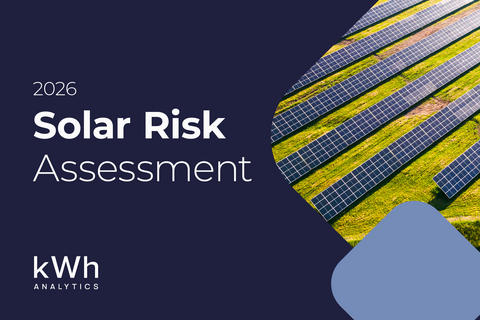
The Solar Risk Assessment is the leading publication on risk management and mitigation for renewable energy.
This year’s report arrives at an inflection point for the energy transition, as unprecedented demand drives increasing reliance on solar, wind, and storage. At the same time, renewable energy and battery storage systems face ongoing operational and safety concerns, heightened cybersecurity threats, and intensified climate impacts amid a volatile regulatory landscape. Overcoming these challenges to meet demand will require robust collaboration between asset owners, operators, financiers, insurers, brokers, and manufacturers.
“Delivering durable, reliable, affordable renewable energy infrastructure requires the honest, data-driven exchange this report is built on,” said kWh Analytics CEO, Jason Kaminsky. “The valuable research from this year’s SRA contributors reflects the rigorous thinking our industry needs to build robust infrastructure in a heightened risk environment. We are grateful for their meaningful collaboration.”
The 2026 SRA consists of 19 articles written by U.S. and global industry partners and provides an objective analysis of the top resilience, reliability, and emerging risks facing the renewable energy sector.
Key takeaways include:
- While hail is still the most expensive type of insured loss, the industry is starting to turn its attention to fire risk. 84% of PV fire events are equipment-driven brushfires, not wildfires, meaning the risk originates within the plant itself.
- We are identifying ever more nuanced operational risks, which are now measurable drags on revenue and useful life. Tracker twist, fungal soiling, junction box fires, and substantial anomalies are cropping up as unexpected yet impactful issues.
- Financing and compliance terms are tightening. Only 38% of developers feel fully prepared for the new prohibited foreign entity (PFE) rules taking effect in 2026, and non-compliance with heightened regulatory standards can trigger penalties of $1M per day for renewable energy developers.
Findings in the 2026 SRA by category include:
Resilience
- It’s Not All About Stow: Hail-Hardened Modules Plus Robust Stow is Needed to Keep a 100MW Powerplant Below an Acceptable Loss Threshold for 13% of the US (kWh Analytics & Groundwork Renewables)
- IEC Standards Underrepresent Cyclical Loading Experienced During a Real-World Hurricane by 8x (GameChange Solar)
- 32% More U.S. Wind Turbines Hit by 4+ Lightning Strokes in 2025 (Vaisala Xweather)
- Big Losses, Limited View: Only 4% of PV Fire Loss Events Occur in High Wildfire Risk Areas, While 84% of Fire Events Are Due to Equipment-Driven Brushfire (kWh Analytics)
- Invisible Ignition Risk: 79% of High-Risk PV Connector Failures Show No Thermal Signature at Time of Inspection (Nextpower)
- 30% of Manufacturers Exhibit Junction Box Failures in PQP Testing, Raising Fire Risk Across PV Portfolios (Kiwa PVEL & Kiwa PI Berlin)
Reliability
- Choose Wisely: Assumed Useful Lives of 30 Years+ Make Project Financial Returns Increasingly Vulnerable to Module (kWh Analytics & DNV)
- The Propeller Effect: How Tracker Operational Twist Can Reduce Total Yield by Over 2% and Increase Module Failure Risk (Azimuth Advisory Services)
- Thermal Anomaly Data From Over 3,000 Assets Shows Degradation Accelerating After Year 7 (Above Surveying)
- Blown Away: Industry Standard Practice of Modeling With Hourly Wind Data Underpredicts Energy Losses, Due to Tracker Wind Stow, by Up to 4% (Array Technologies)
- Undersized Fuses Caused 15% Power Loss and Over $200k Annual Revenue Loss: A Case Study (Univers & Lightsoure bp)
- Inverter Shutdowns Drive 28% of Recoverable Solar Performance Risk: Insights From 6.5 GW of Global Assets (SmartHelio)
- In 2025, 34.2% of Substations Inspected > 1 Time Had a High Priority Anomaly (Raptor Maps)
- Widespread Fungal Soiling Causing 5% Loss in the Humid Subtropical U.S. Alone (Solar Unsoiled)
- Thermal Anomalies in BESS: 75% of Sites Show Early HVAC-Related Risk Signals (PowerUp)
- SOC Inaccuracies Can Cost BESS Operators More Than $1 Million per GWh Annually (ACCURE Battery Intelligence)
Emerging Risks
- New Prohibited Foreign Entity (PFE) Rules Take Effect in 2026. Only 38% of Developers Feel Fully Prepared (Crux)
- Valuation “Step-Up” Risk Is a Binding Constraint for Renewable Energy Tax Insurance: 75% of Underwriters Won’t Cover Above 25% (CAC)
- 1 Million Dollars a Day in FERC Penalties Can Be Avoided With Proper Cyber Security (Vaisala)
To access the complete 2026 Solar Risk Assessment, please visit kwhanalytics.com/industry-reports/2026-solar-risk-assessment/
About kWh Analytics
Solar Energy Insurance Services, Inc., a kWh Analytics company, a leader in insuring the energy transition, underwrites property insurance and revenue firming products for renewable energy assets. Our proprietary database of 300,000+ zero-carbon projects and $150B in loss data supports advanced modeling, insights, and precise risk assessment for renewable energy, mixed energy, and low-carbon projects. This data-driven approach incorporates resiliency measures in risk evaluation, promoting sustainable practices in the energy sector.
Our tailored solutions further our mission to underwrite the Energy Transition. Trusted by 15 global reinsurers and recognized by Insurance ERM Climate and Sustainability Awards as Sustainable Insurer of the Year, kWh Analytics continues to pioneer in the renewable energy insurance sector.
Learn more at https://www.kwhanalytics.com/, or LinkedIn.
View source version on businesswire.com: https://www.businesswire.com/news/home/20260512932725/en/
Media gallery



