
Little Rock, AR – September 23, 2026 – PRESSADVANTAGE –
Bale Collision Center has published consumer guidance explaining how collision repair professionals evaluate vehicle door damage after an accident. The September resource introduces a four-area framework covering door fit and operation, internal components, vehicle technology, and adjoining body areas.
The guidance expands on Bale Collision Center’s auto body repair information by distinguishing damage to the visible outer panel from conditions involving the complete door assembly. A door can continue to open and close after an accident while still requiring evaluation of components affected by the impact.
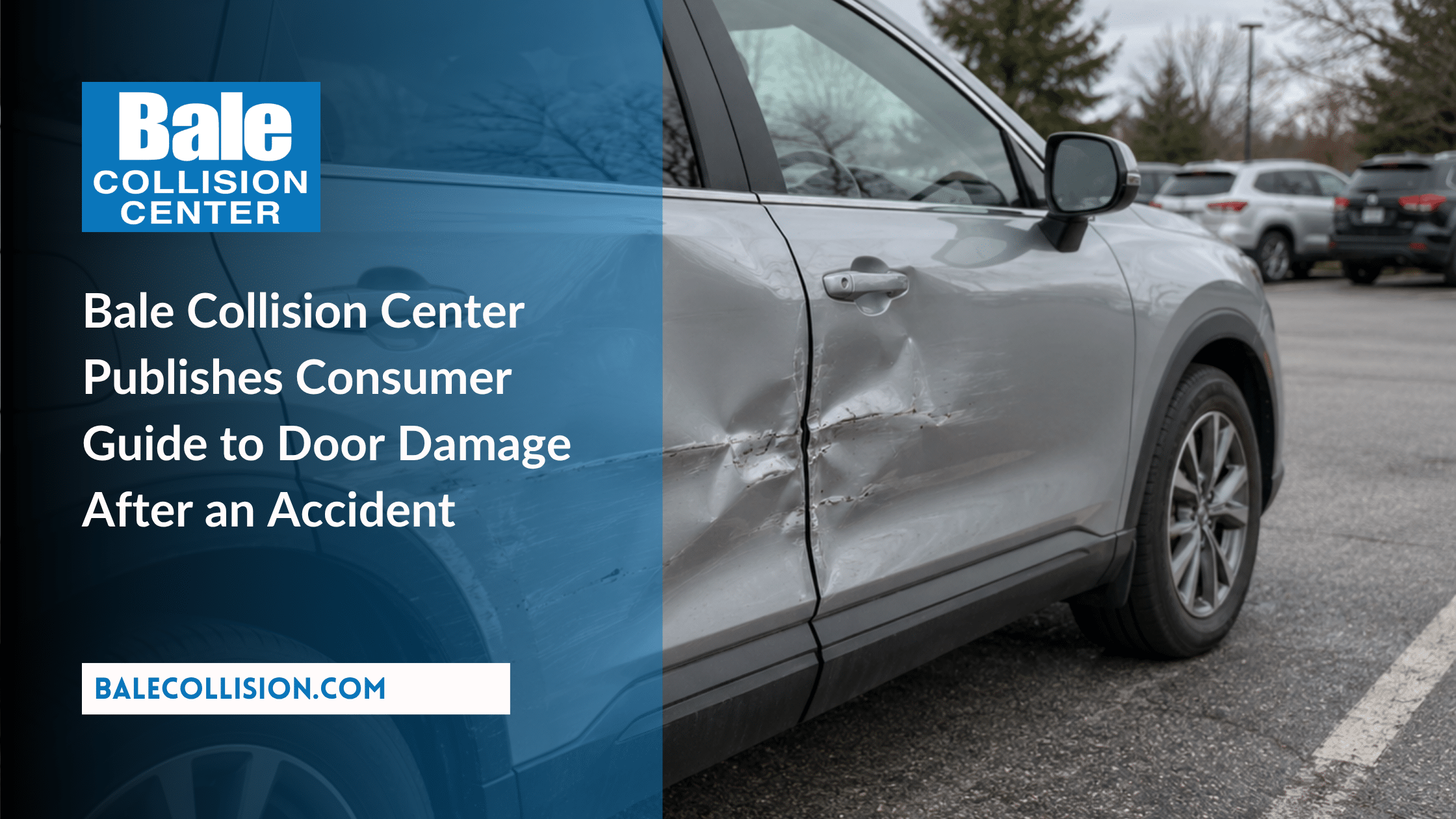
Door fit and operation form the first area of the framework. Side impacts, sideswipes, parking lot collisions, and impacts involving an open door can change how the door sits within the surrounding body opening.
Changes in panel gaps, increased effort when opening or closing, unusual contact with adjoining panels, or differences in how the door latches can provide useful information about the affected area. These observations do not identify the damaged component by themselves, but they can help direct inspection toward the door, hinges, latch, mounting points, or surrounding body components.
Hinges and latches are particularly relevant because they help position and secure the door. When collision forces alter the relationship between these components and their mounting areas, technicians can evaluate the source of the change rather than treating exterior appearance as the only repair consideration.
The second area covers components contained within the door. Depending on the vehicle, a door assembly can incorporate structural reinforcement, window glass, a regulator, tracks, handles, weather seals, wiring, switches, speakers, and other equipment.
Window operation can provide additional information after an impact. Changes in how the glass raises, lowers, or fits within the opening can make the window mechanism, tracks, seals, and surrounding door condition relevant to the repair assessment. Wind noise or moisture around a damaged door can also provide context when evaluating fit and sealing.
Door construction affects repair planning as well. Modern doors can incorporate different materials and reinforcement designs. Applicable manufacturer repair information may establish procedures or limitations based on the component, material, and location of the damage.
This is why the size of an exterior dent does not independently determine whether a door component should be repaired or replaced. A localized condition on an accessible portion of a panel can present different repair considerations from damage involving an edge, attachment point, reinforcement area, or other part of the assembly.
Bale Collision Center’s collision repair information provides additional context about how documented accident damage becomes part of a developed repair plan.
The third area is vehicle technology. Doors and mirrors can contain electrical and electronic equipment that varies substantially among vehicle configurations. Power windows and locks, mirror controls, lighting, wiring, cameras, indicators, heating functions, and other features may be located within the affected area.
When a mirror or another equipped component requires replacement, identifying the vehicle configuration becomes part of parts planning. Two mirror assemblies that appear similar externally may support different functions depending on the vehicle’s installed equipment.
Some vehicles can also have safety-related electronic components in or near areas affected by a side collision. Their presence does not mean every damaged door requires the same diagnostic operation. Repair planning can identify the equipment installed on the individual vehicle and incorporate applicable vehicle-specific procedures when those components are relevant.
The fourth area extends the evaluation beyond the door. A side impact can also involve the front fender, rocker area, body pillars, rear quarter panel, or another door. Evaluating these adjoining areas helps establish whether the documented damage is isolated to the door or forms part of a broader side-body repair.
This becomes particularly relevant after a sideswipe or other collision involving several adjacent components. Repair planning can coordinate door repair or replacement with adjoining panel work, component fit, refinishing, glass and trim operations, and applicable diagnostic procedures.
The distinctive focus of the September guidance is its assembly-based approach. Instead of organizing door damage according to dent size or exterior appearance, the resource separates the evaluation into four connected areas: how the door fits and operates, what components are contained within it, which vehicle technologies are present, and whether the collision extends into the surrounding body.
This framework also gives drivers specific conditions to document after an accident. Changes in door operation, panel gaps, window movement, mirror functions, wind noise, moisture, or adjoining panel fit can provide useful information during the repair assessment.
A door that does not latch securely after a collision requires particular attention because the condition involves how the door is retained in the body opening. Evaluation of the latch, hinges, door, and associated mounting areas can determine what the collision affected.
Information about Bale Collision Center and its facility is available through the Downtown Little Rock location resource.
The central point of the September guidance is that collision-related door damage is evaluated as an assembly rather than solely as an exterior panel. Door operation, internal components, installed technology, and adjoining body areas collectively provide the information needed to develop the repair plan for the individual vehicle.
Bale Collision Center is a family-owned collision repair business that has served the Little Rock community since 1952. The company provides collision repair, auto body repair, automotive paint services, paintless dent repair, glass replacement, and ADAS services through its two Little Rock locations. Its Downtown facility is located at 100 N Cross St, Little Rock, AR 72201.
###
For more information about Bale Collision Center, contact the company here:
Bale Collision Center (Downtown)
Jason Spiller
(501) 375-0910
jspiller@baleautomotive.com
100 N Cross St, Little Rock, AR 72201, United States


